 TaroraGet early access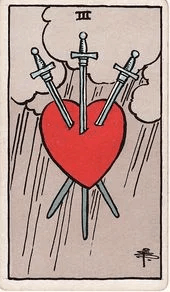
Three of Swords
Tarot Card Meaning
Upright
heartbreak, painful truth, grief, sorrow
Reversed
healing, releasing the hurt, forgiveness
A heart, drawn plain and red, is pierced through by three swords against a grey sky streaked with rain. There's no figure in this card, no face to read. The pain is the whole image, rendered directly, without softening it into metaphor or hiding it behind a story.
What does the Three of Swords mean?
The Three of Swords means heartbreak, painful truth, grief, and sorrow, the specific ache of something real being lost or something honest finally being said out loud. It's one of the deck's most direct cards, and it doesn't try to soften what it shows.
The rain matters: this isn't a passing sting, it's weather, something moving through in its own time rather than something you can simply decide to stop feeling.
What does the Three of Swords mean upright?
Upright, it points to a real, painful moment: heartbreak, betrayal, or a hard truth landing with genuine, sudden force right now, without much warning. The hurt is current and sharp, not old and faded, something actively being felt rather than remembered.
It can also mark honest grief being allowed to exist, rather than pushed aside before it's actually finished moving through.
What does the Three of Swords mean reversed?
Reversed, it suggests real healing beginning, the releasing of a hurt that's been held onto for too long, or forgiveness finally becoming possible after real time has passed. The swords haven't vanished, but the sky behind them is starting to clear.
It can also mean grief resurfacing after being set aside too soon, a pain that needs more real attention than it was given the first time.
What does the Three of Swords mean in love?
In love, the Three of Swords often marks real heartbreak, a betrayal, a painful ending, or a hard truth that changes how the whole relationship is actually understood in hindsight. It favors letting the grief be real rather than rushing past it.
Reversed, it can point to real healing after heartbreak, or old pain finally being released instead of carried forward into what comes next.
What does the Three of Swords mean in work?
At work, it often signals a genuinely painful setback, a harsh piece of feedback, or a professional disappointment that stings more than expected. Reversed, it can mean recovery from that setback, or a hard truth finally making sense in hindsight.
What does the Three of Swords ask of you?
It asks whether you're actually letting yourself feel what's real right now, or rushing to patch over a wound that needs real time. Pain like this doesn't skip steps well. The card's real question is whether you're honoring what actually hurts.
A few reflection prompts, if this one's worth sitting with:
- What real pain have I been trying to rush past instead of actually feeling?
- Is there a hard truth I've been avoiding that would genuinely help to hear?
- What would it look like to let this grief take the real time it needs?
FAQ
Does the Three of Swords always mean a breakup? Not always. It often points that direction, but more broadly it represents any genuine heartbreak or painful truth, not romantic loss specifically.
Is the Three of Swords a bad card to draw? It's a difficult one, since it names real pain directly, though it's honest rather than purely negative, and healing does follow it.
Why is there no figure in the Three of Swords? The absence keeps the focus entirely on the pain itself, universal rather than tied to any one person's specific story.
Does the Three of Swords reversed mean the pain is over? Often it means real healing is underway, though it can also mean old grief resurfacing to finally be dealt with properly.
If the Three of Swords showed up in a reading of your own, Sophia can help you sit with what's actually real right now. Join the waitlist to be there when Tarora opens, or read how Tarora reads a spread in the meantime.