 TaroraGet early access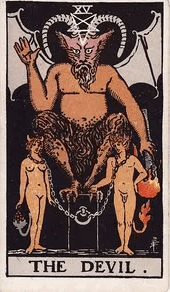
The Devil
Tarot Card Meaning
Upright
attachment, compulsion, shadow, material bind
Reversed
breaking free, seeing the chain, release
A horned, bat-winged figure perches on a pedestal above two chained figures, an inverted pentagram glowing between its horns. Look closely at the chains around their necks, though, and they're loose enough to lift off. Nobody in this image is actually trapped. They've simply forgotten, or never checked, that the chain was never locked.
What does The Devil mean?
The Devil is attachment, compulsion, and a shadow side of ourselves that quietly binds us to something material or habitual. It's rarely about literal evil. It's about a pattern, a craving, or a fear that feels inescapable but, on inspection, has more slack in it than it seems to.
The loose chains are the card's real message. Whatever's holding you here is often loosened by nothing more than actually looking at it directly.
What does The Devil mean upright?
Upright, it points to being caught in a compulsion, an unhealthy attachment, or a pattern that runs on autopilot rather than choice. Something material, a habit, a relationship, a fear, has more of a grip on you than it should, and the card is naming that grip honestly.
It can also describe a shadow part of yourself you'd rather not look at directly, one that's shaping your choices more than you'd like to admit.
What does The Devil mean reversed?
Reversed, it suggests breaking free, finally seeing the chain for what it is, or genuine release from something that had you bound. The realization that the chain was never actually locked tends to arrive first, and the freedom follows once you act on it.
It can also mean recognizing a compulsion clearly enough, for the first time, to actually start loosening its hold.
What does The Devil mean in love?
In love, The Devil can mean a relationship held together by compulsion or fear rather than genuine choice, or an attachment that's become unhealthy for one or both people. It favors honest inventory over staying out of habit alone, especially where fear of being alone is doing more work than real connection.
Reversed, it can mean finally recognizing an unhealthy dynamic and starting to step out of it, or a relationship becoming freer once an old pattern gets named.
What does The Devil mean in work?
At work, it can point to feeling trapped by a job, a habit, or a material need that's steering decisions more than genuine ambition is. Reversed, it can mean breaking out of a role or routine that had quietly become a cage, often by finally naming what was actually keeping you there.
What does The Devil ask of you?
It asks whether the thing holding you here is actually as locked as it feels, or whether you've simply stopped checking. Compulsions and attachments often loosen the moment they're looked at honestly instead of managed around indefinitely, and that first honest look is usually the hardest part.
A few reflection prompts, if this one's worth sitting with:
- What do I keep telling myself I can't change, and is that actually true?
- What material or habitual thing has more of a grip on me than I'd like?
- What would happen if I actually tested whether this chain is locked?
FAQ
Does The Devil card mean something evil is happening? Almost never literally. It usually points to compulsion, unhealthy attachment, or a shadow pattern, not literal malevolence.
Is The Devil always a bad card? It can feel unsettling, but it often marks the exact moment you're finally able to see and address a pattern that's been running quietly for a while.
What does The Devil reversed mean for addiction or bad habits? It often signals a genuine turning point, the start of breaking free, though the work of staying free is usually still ahead.
Why are the chained figures given small tails? They suggest the figures have partly taken on the devil's own nature, a reminder that the bind is partly self-made, not purely external.
If The Devil showed up in a reading of your own, Sophia can help you look honestly at what's actually holding you. Join the waitlist to be there when Tarora opens, or read how Tarora reads a spread in the meantime.