 TaroraGet early access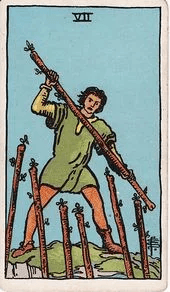
Seven of Wands
Tarot Card Meaning
Upright
defending your ground, conviction, standing firm under pressure
Reversed
overwhelm, giving up ground, exhaustion, defensiveness
A figure stands on high ground, wand raised, defending against six other wands rising up from below. His footing is secure even though he's outnumbered. This is a card about holding real ground under real pressure, one person standing firm against more than one challenge at once.
What does the Seven of Wands mean?
The Seven of Wands is defending your ground, conviction, and standing firm under real pressure, the specific effort of holding a position you actually believe in while it's being challenged. It's not about starting a fight, it's about not backing down from one that's already arrived.
The high ground matters: whatever advantage this figure has, he earned it before the challenge began, and that's exactly what makes the defense possible now.
What does the Seven of Wands mean upright?
Upright, it points to real conviction under pressure: standing firm on a position you've actually earned, defending something worth defending even when it's genuinely difficult to do so. Whatever's being challenged right now, this card says your ground is worth holding firmly.
It can also mark a moment of being tested from multiple directions at once, and finding you're more capable of holding steady than expected.
What does the Seven of Wands mean reversed?
Reversed, it suggests real overwhelm, giving up ground that was genuinely worth defending, or exhaustion from holding a position too long without any real support. The high ground is still there, but it's starting to feel genuinely unsustainable right now.
It can also mean becoming defensive out of habit, fighting battles that no longer actually need fighting.
What does the Seven of Wands mean in love?
In love, the Seven of Wands often marks defending a relationship or a boundary that genuinely matters, standing firm against real outside pressure, doubt, or judgment. It favors holding your ground firmly when you actually believe in what you're protecting.
Reversed, it can point to real exhaustion from constant defending, or giving up on something worth keeping simply because it got difficult.
What does the Seven of Wands mean in work?
At work, it can mean defending a real position or idea under genuine pressure, standing firm on ground you've actually earned. Reversed, it can mean feeling overwhelmed by competing demands, or giving up a position worth holding out of sheer exhaustion.
What does the Seven of Wands ask of you?
It asks whether the ground you're defending is actually worth the effort it's costing you to hold. Standing firm here is a real choice. The card's real question is whether this fight is genuinely yours, or one you're waging out of habit.
A few reflection prompts, if this one's worth sitting with:
- What am I defending right now that's genuinely worth the effort?
- Where am I fighting out of habit rather than real conviction?
- What would it look like to hold this ground without exhausting myself?
FAQ
Does the Seven of Wands mean I'm being attacked? Not literally. It usually points to real pressure or challenge from multiple directions, worth defending against if the ground actually matters to you.
Is the Seven of Wands a good card in a work reading? It can be, when it reflects real conviction defending something worth holding, though it also warns against exhausting yourself entirely over a fight that ultimately doesn't matter much.
Why is the figure on higher ground than his challengers? It represents an advantage already earned before the challenge began, a reminder that real preparation makes the current defense actually possible.
Does the Seven of Wands reversed mean I should give up? Not automatically. It more often flags real exhaustion or overwhelm worth addressing, not necessarily a signal the position itself was wrong.
If the Seven of Wands showed up in a reading of your own, Sophia can help you see what's actually worth defending. Join the waitlist to be there when Tarora opens, or read how Tarora reads a spread in the meantime.