 TaroraGet early access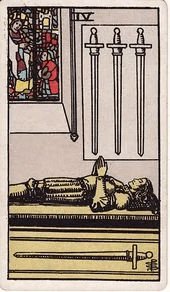
Four of Swords
Tarot Card Meaning
Upright
rest, recovery, retreat, quiet restoration
Reversed
restlessness, burnout, a needed pause ignored
A knight lies in stone effigy inside a quiet chapel, hands folded in prayer, three swords mounted on the wall above him and a fourth lying beneath where he rests. Nothing here is urgent. This is the deck's clearest image of deliberate stillness, rest taken on purpose rather than forced by collapse.
What does the Four of Swords mean?
The Four of Swords means rest, recovery, retreat, and quiet restoration, the specific relief of stepping back from real demands to actually let the mind and body recover. It's less about giving up and more about a genuinely necessary pause.
The chapel setting matters: this rest is treated as something sacred, worth real protection, not a lesser choice made only when nothing else is possible.
What does the Four of Swords mean upright?
Upright, it points to a real, needed retreat, stepping away from conflict or overwork to actually recover before continuing on with anything else at all. The knight isn't defeated, he's deliberately still, gathering real strength for whatever genuinely comes next.
It can also mark a genuine need for solitude, quiet time alone that isn't avoidance but honest, necessary maintenance.
What does the Four of Swords mean reversed?
Reversed, it suggests restlessness, burnout, or a needed pause being genuinely ignored in favor of pushing through anyway, past every real warning sign along the way to a hard stop. The body asks for rest and the answer keeps being no.
It can also mean the rest finally ending, a return to real activity after recovery has actually done its work.
What does the Four of Swords mean in love?
In love, the Four of Swords often marks a real need for space, a relationship pause that isn't ending things but genuinely catching a breath together first. It favors honest rest over forcing constant closeness that neither person can currently sustain.
Reversed, it can point to burnout in the relationship from never actually stepping back, or a welcome return to closeness after real time apart.
What does the Four of Swords mean in work?
At work, it often signals a genuine need for a break, stepping back from a demanding project before real burnout sets in and does lasting damage. Reversed, it can mean ignoring that need until exhaustion forces the issue, or returning to work refreshed after real recovery.
What does the Four of Swords ask of you?
It asks whether you're actually willing to rest before you're forced to, or whether you'll keep pushing until something genuinely breaks under the strain. Recovery here isn't weakness. The card's real question is whether you can let stillness be enough for now.
A few reflection prompts, if this one's worth sitting with:
- What real rest have I been putting off because it felt unproductive?
- Am I pushing through exhaustion that actually deserves a genuine pause?
- What would it look like to treat my own recovery as worth protecting?
FAQ
Does the Four of Swords mean I need a break? Often, yes. It's one of the deck's clearest rest-and-recovery cards, tied closely to a genuine, needed pause.
Is the Four of Swords about illness? It can suggest physical recovery, but more broadly it represents any real retreat for rest, physical, mental, or emotional.
Why is the knight in the Four of Swords shown as a stone effigy? The stillness represents deliberate, deep rest, a pause serious enough to be treated with the same reverence as the sacred space around it.
Does the Four of Swords reversed always mean burnout? It often points that direction, ignored rest catching up, though it can also mean recovery genuinely ending and real activity resuming.
If the Four of Swords showed up in a reading of your own, Sophia can help you see where real rest is actually needed. Join the waitlist to be there when Tarora opens, or read how Tarora reads a spread in the meantime.