 TaroraGet early access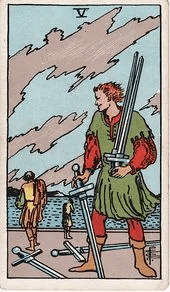
Five of Swords
Tarot Card Meaning
Upright
conflict, a hollow victory, winning at a cost
Reversed
reconciliation, making amends, walking away from the fight
A man gathers up swords with a satisfied, faintly smug look, while two defeated figures walk away in the distance under a turbulent sky. He won. It doesn't look like it cost him anything, and that's exactly the problem this card is pointing at, the real price of a victory that isn't actually worth what it took.
What does the Five of Swords mean?
The Five of Swords means conflict, a hollow victory, and winning at a cost, the specific feeling of coming out ahead in a way that doesn't actually feel good once it's done. It's less about losing and more about what a win can quietly cost.
The turbulent sky matters: nothing here is settled, this victory hasn't actually resolved the real conflict, it's just moved it further down the road.
What does the Five of Swords mean upright?
Upright, it points to real conflict, an argument won at the cost of a real relationship, or a victory that leaves genuine resentment in its wake long after the fight itself ends. Getting your way isn't the same as things actually being resolved.
It can also mark a moment worth walking away from entirely, recognizing a fight that isn't actually worth winning.
What does the Five of Swords mean reversed?
Reversed, it suggests reconciliation, making real amends, or genuinely walking away from a fight instead of pressing for one more point that doesn't actually matter in the end. The urge to win loosens enough to let something more important through.
It can also mean lingering resentment from a past conflict that technically ended but never actually healed.
What does the Five of Swords mean in love?
In love, the Five of Swords often marks a real conflict where being right matters more than being close, an argument won that costs real trust between two people who love each other. It favors choosing the relationship over the point being argued.
Reversed, it can point to real repair after conflict, both people genuinely choosing connection over being the one who wins.
What does the Five of Swords mean in work?
At work, it often signals real workplace conflict, a win that damages a genuine working relationship, or office politics played at a real cost. Reversed, it can mean choosing collaboration over ego, or repairing a relationship after a hard disagreement.
What does the Five of Swords ask of you?
It asks whether the fight you're currently in is actually worth what winning it would cost you. Some victories aren't worth having. The card's real question is whether you can tell this one apart from a fight genuinely worth having.
A few reflection prompts, if this one's worth sitting with:
- What conflict am I currently in where winning might cost more than it's worth?
- Is there a fight I'm still holding onto that's actually already over?
- What would it look like to walk away from being right, for something that matters more?
FAQ
Does the Five of Swords mean I'll lose an argument? Not necessarily. It more often points to a real victory that costs something valuable, not an outright loss.
Is the Five of Swords about betrayal? It can involve real conflict that feels like betrayal, though more broadly it represents any win that comes at a genuine cost.
Why does the man in the Five of Swords look smug? His expression emphasizes the hollowness of the win, satisfaction on the surface while the real cost of it goes unexamined.
Does the Five of Swords reversed mean the conflict is over? Often it signals real reconciliation, though it can also mean resentment lingering even after the fight has technically ended.
If the Five of Swords showed up in a reading of your own, Sophia can help you see what a real win here might actually cost. Join the waitlist to be there when Tarora opens, or read how Tarora reads a spread in the meantime.